
The 3 Things Amazon Won’t Tell You About Reinstatement
Most sellers don’t realize Amazon hides the real rules behind reinstatement. This post breaks down the three things Amazon never tells suspended sellers — why your first appeal is your best chance, why templates get flagged instantly, and why Amazon cares more about your operational process than your apology. When you understand how Amazon actually evaluates appeals, you stop guessing and start submitting clean, structured, policy‑aligned plans that get reinstated. That’s the difference an expert brings.



The 3 Things Amazon Won’t Tell You About Reinstatement
Most suspended sellers don’t fail because they’re bad at selling. They fail because Amazon hides the rules behind vague policy language and automated emails. And when your income depends on your account, that lack of clarity feels brutal.
Here are the 3 things Amazon will never tell you — but every seller needs to understand if they want fast, clean reinstatement.
1. Your first appeal is your best chance.
Amazon weighs your first submission heavily because it shows how well you understand the issue and whether you can take responsibility for it. A weak first appeal can make the process harder — but it does not mean reinstatement is impossible.
Just because your first appeal didn’t work doesn’t mean you can’t get reinstated. It simply means you now have to correct the mistakes from that first submission and present a clean, structured, policy‑aligned appeal that gives Amazon a clear reason to approve you. This is where most sellers need real Amazon seller account reinstatement help, because guessing only makes things worse.
2. Templates get flagged instantly.
Amazon sees thousands of copy‑and‑paste appeals every week. If your appeal sounds like everyone else’s, it gets routed to the same outcome.
This is why “appeal templates” and AI‑generated letters fail. Amazon knows exactly what they look like — and they’re rejected before a human ever reads them.
If you want to know how to write an Amazon appeal letter that actually works, it starts with understanding the policy violation, the root cause, and the operational fix. Not a template.
3. Amazon cares more about your process than your apology.
They don’t want to hear how sorry you are. They want to see the exact steps you’ve put in place to prevent the issue from happening again.
A strong appeal is not emotional. It’s operational. It shows Amazon you understand the problem and have already solved it.
This is the difference between a reinstatement and another denial — and it’s why so many sellers come to me after fixing a denied Amazon appeal on their own didn’t work.
If you’re suspended right now, you don’t need panic — you need precision.
Amazon’s internal teams respond to structure, clarity, and accountability. Not emotion. Not templates. Not guesswork.
I help sellers cut through the noise and submit appeals that align with Amazon’s internal review logic. If you want the fastest path back to selling, work with someone who understands exactly how Amazon evaluates reinstatement cases — an Amazon suspension reinstatement expert who does this every day.
That’s what I do.
If your Amazon account is suspended, don’t guess. Don’t rewrite the same appeal. Don’t send another template.
You need a clean, structured, policy‑aligned plan that Amazon will actually respond to. That’s what I do every day.
Book your free 10‑minute call — and let’s get your account back.


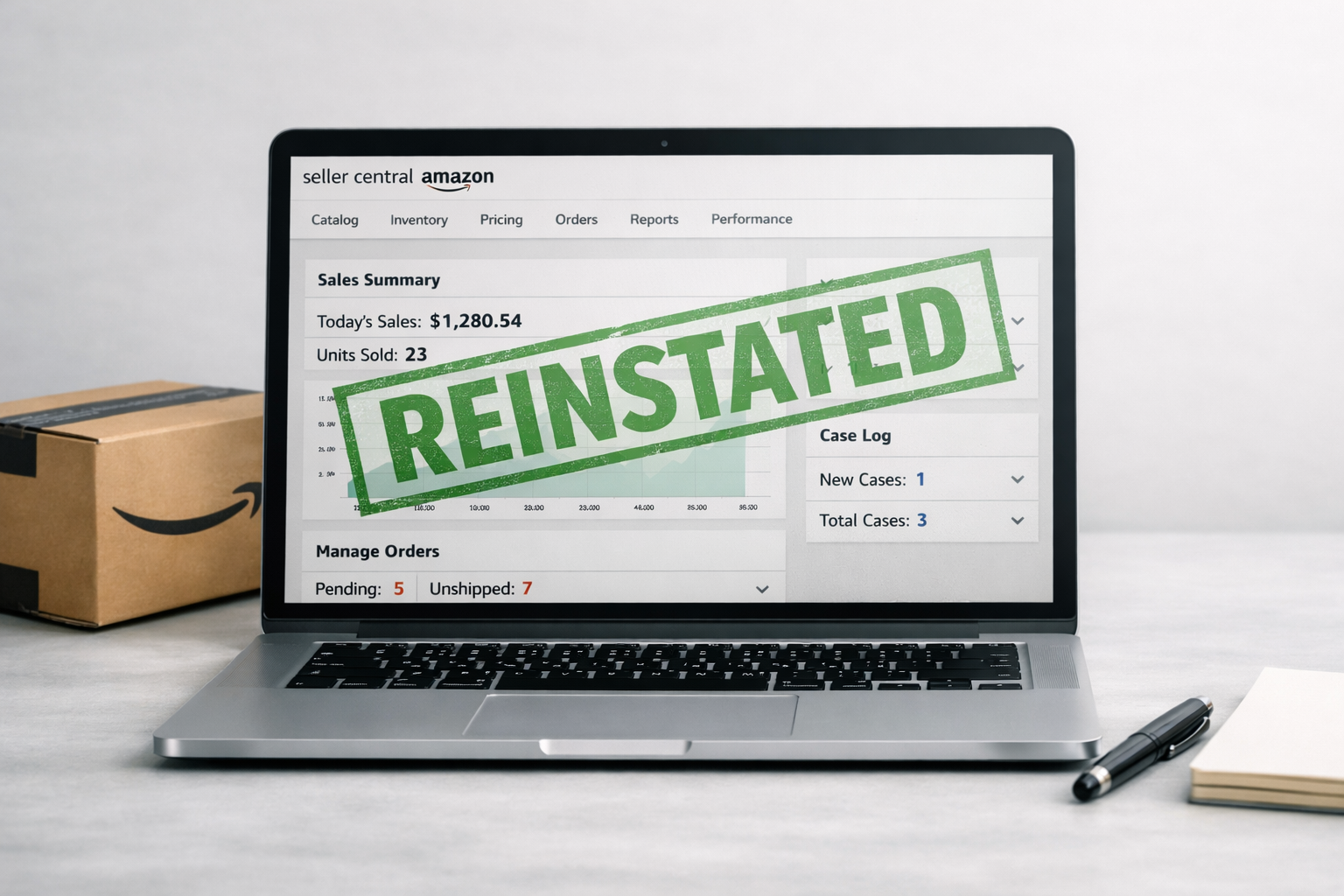


What I provide is experienced guidance to help you approach the reinstatement process strategically and avoid the common mistakes that often delay or prevent recovery.
My goal is to help you present the strongest possible case so you have the best chance of getting your account back online.